Making It Happen
I found Making It Happen: A Non-Technical Guide to Project Management by Kyle Mackenzie to be a very interesting read. The design and manufacturing process is something that I greatly enjoy, so I found the lessons that Mackenzie talked about to be of great value. One of the most entertaining aspects of the book is how Campbell kept referring to Martha as his "consultant" and how his "assignment" team responded to that. If he told his team that his consultant was an eccentric eighty-nine year old woman that sat in a rocking chair and smoked a pipe, than his team may have not responded to the plan he was trying to follow. For example, the team was very accustomed to gantt charts. Martha made some excellent points on how they were ultimately an ineffective tool and introduced him to dependency charts. After explaining how they worked and rereading that passage a few times, they seemed like a much more logical tool for the assignment that Campbell was working on. His team was a bit hesitant at first, but since a so called consultant talked told him to use this strategy, their December 28th meeting was a success. Ralph, the project sponsor, did not like the dependency chart and nearly blew his stack when Campbell didn't present him one, as well as detailed work breakdown structure. Stu, the feasibility analyst and company VP, liked it, but reminded Campbell that you have to keep the sponsor happy since he controlled the cash flow.
My favorite quote from the story was when Campbell said in reference to the dependency charts, "It always amazes me how people accept so-called expert opinions. In the future, whenever I have a good idea, I'll just claim some consultant suggested it." (Pg. 161) I find this to be humorous because it is so true. Whenever someone tells me that an expert has recommended something, than I am more likely to try it than if it is that individuals own idea. This also works in relation to my students because when I tell them that the Principal said something than they are more likely to do what is expected.
I was disappointed when I found out this was not a true story. It lost some of it's credibility to me.
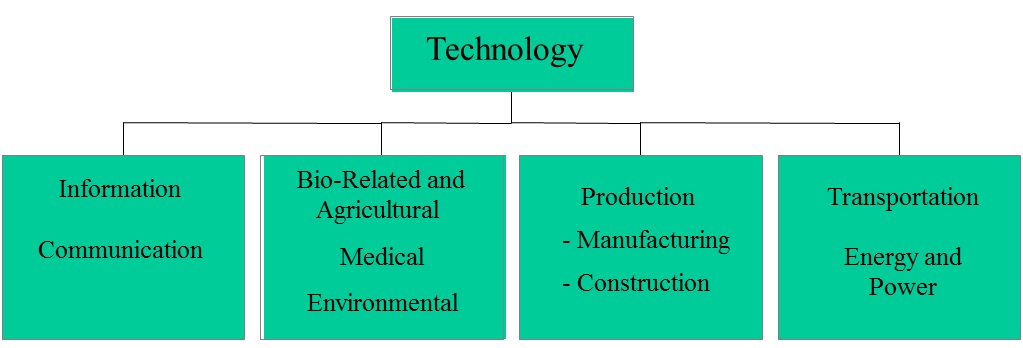
Content: The teacher and students will define and discuss the importance of technology in their daily lives. The major areas of technology will be discussed. The teacher will use What is Technology Powerpoint to aid in the discussion while the students use What is Technology Graphic Organizer to record their responses and ideas.
Technology Definition: Technology is the evolution of an idea. It's the process by which humans modify nature to meet their needs and wants.
Categories of Technology:
Standards for Technological Literacy:
|
BM F: New products and systems can be developed to solve problems or to help do things that could not be done without the help of technology |
|
BM G: The development of technology is a human activity and is the result of individual or corporate needs and the ability to be creative. |
|
BM H: Technology is closely linked to creativity, which has resulted in innovation. |
|
BM L: Inventions and innovations are the results of specific, goal-directed research. |